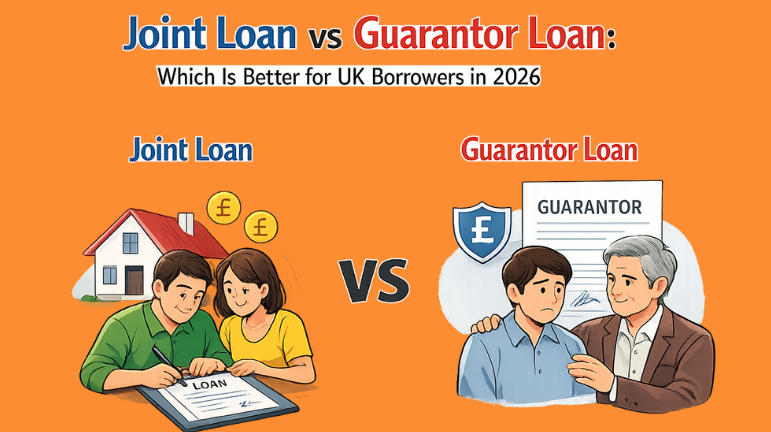
Yes, you can get a guarantor loan without being a homeowner. Guarantor-based loans are mainly unsecured loans where a friend or a family member with good finances helps you qualify for a loan by guaranteeing the payments. The loan is backed by the guarantor’s and the borrower’s income, and not the asset. Hence, you may get a guarantor loan without owning a home. The blog details guarantor loans in detail for you to understand and use them wisely.
What do you mean by guarantor loans?
A guarantor loan is a type of unsecured personal loan where a third person, a guarantor, agrees to repay the loan dues if the borrower cannot. It is ideal for borrowers who struggle to get a loan due to bad credit history or low income. A guarantor could be a family member with a good income and credit score. They may help you get a quick loan at affordable interest rates and terms.
Is homeownership needed to get a guarantor loan?
You do not need to be a homeowner to apply for a guarantor loan in the UK. You may get one as a non-homeowner or a tenant as a permanent resident with a valid income. Moreover, you must have a credit-worthy guarantor to qualify for the loan.
Almost anyone can be a loan guarantor if you trust that person. A guarantor needs to be 21 years of age with a good credit history and financial stability. A guarantor may or may not be a homeowner. For example, in tenant guarantor loans, a guarantor is not mandatorily required to prove home ownership.
Who may consider a guarantor-based loan?
You may consider a guarantor-based loan in situations like:
- You have a low credit score and income
Individuals with bad credit and low income may struggle to get a loan. It is because the loan companies require some assurance of getting the payments back. In the absence of such proof, the loan company may reject the application. A guarantor with a fine credit profile and income may help you qualify for the guarantor loans without a homeowner status.
- Students with limited credit history
Some individuals, like learners, lack enough credit history to get a loan. It is because limited transactions or no personal bank accounts impact the loan company’s ability to analyse the affordability. Thus, qualifying individually may be difficult in that case. Here, providing a guarantor (ideally a guardian) may help. They may provide the assurance of getting the payments on time.
- You are unemployed
Getting a loan without a fixed income is challenging in the UK. You need to prove that you can manage the loan payments without defaulting. Unemployed individuals with part-time income may get small loans. However, for amounts exceeding £2500, one needs a guarantor.
- You need affordable loan terms
Undoubtedly, a guarantor-based loan reduces the liabilities on the loan. It helps you fetch a higher loan amount, low interest, and flexible loan terms. It is because the loan is tied to the sound finances of a guarantor. Thus, you may meet your needs cheaply if you can coordinate well on the loan with the guarantor.
- Self-employed with patchy income
If you’re self‑employed and lenders think your income is “too irregular,” a guarantor reassures the loan company of the consistent repayments. They may help you get the loan for important needs like purchasing equipment, stationery needs and setting up the home office.
What are some pros and Cons of getting a guarantor loan?
Just like any other loan, a guarantor loan has its pros and cons. Here they are:
| Parameters | Pros | Cons |
|---|---|---|
| Access to Credit | Help individuals with bad credit qualify quickly. | Only suitable if you can trust the guarantor with repayments. |
| Credit Building | Repaying a loan consistently improves your credit score. | Missed payments can damage both your credit score and the guarantor’s credit profile. |
| Approval Chances | Higher due to the guarantor’s income acting as additional security. | You may still be rejected if affordability requirements are not met. |
FAQs
Now, let’s analyse some FAQs that might help you understand the concept better:
- How much can you get on a guarantor loan?
You may get up to £1000-£10000 on a guarantor-based loan for your needs. However, the actual amount that you get depends on the combined loan affordability of the loan applicant and the guarantor.
- How to reduce the risk associated with guarantor loans?
Determine how much you and the guarantor can afford to repay on the loan. Identify the combined income and choose an amount that you can comfortably repay each month. Check whether the guarantor has a valid income and bank account. Otherwise, you may not qualify. Identify and optimise the monthly expenses to make payments effortlessly. Always coordinate well before the payment date to avoid skipping any payment.
- How much does your credit score fall if you default on a guarantor loan?
Defaulting on a guarantor loan may drop your credit score by 250-300 points. Moreover, the default notice stays for 6 months on the credit profile. It may make it difficult for you to get a loan or affordable credit in the future.
- How to know that you have chosen the right guarantor?
A guarantor with a fixed income, good credit score, and stable finances is the right guarantor for you. Additionally, you must share a deep bond with them. It will help you cooperate better on long-term loans, such as a guarantor loan. They should be someone with whom you can discuss finances openly. It could be a friend, father, mother, or spouse.
- What if you and the guarantor cannot pay?
If you and the guarantor cannot pay the loan, it enters default. The loan company may then take legal action and issue a CCJ. It may damage the credit score of the guarantor and the borrower drastically. If your guarantor pledged an asset (in extreme cases), the creditor may repossess it.
Bottom line
Thus, yes, you may get a guarantor home without owning a home. It does not mandatorily require the guarantor to be a homeowner. Instead, an individual guarantor with a consistent income and good credit score may qualify for the loan. It reduces the interest and makes the loan affordable for you. One may consider the loan if they struggle to qualify with a low income and a bad credit score.

When someone writes about UK finance, both research and experience should be visible. Ken Stokes is a prime example of this. He is a well-experienced finance writer and author and possesses years of experience. He is currently responsible for the position of Senior Loan Executive at 24loanswales. He joined the organisation 6 months ago, but he already has enough experience to guide someone on any loan product.Ken Stokes is a PhD holder in the Business Finance stream. Therefore, he has extensive knowledge of the UK finance sector.
Being part of 24loanswales, he has already written research-based blogs for the company’s website. Start reading his blogs here before applying for any loan.